- Evidently
- Posts
- The kind of work that actually lasts
The kind of work that actually lasts
What my dad’s 55-year career taught me about legacy and staying close to the work

Mark Huber
January 21, 2026
Welcome to Evidently—the bi-weekly newsletter where I share my biggest hits (and get honest about my misses) as a first-time VP of Marketing. If this was forwarded to you, join the 5,114 people who apparently enjoy watching me figure this job out in real time by subscribing here.
My dad retired on December 31, 2025 after 55 years at William Huber Cabinet Works.
It’s the family business I grew up in, founded in Chicago by my great grandfather, William, in 1941.
And not a place I work at, which is why you’re reading this newsletter.
I’m far enough into my own career now to understand what a milestone that really is. Not just the length of time. But what it takes to commit to the same work, the same standards, and the same people for that long.
Especially knowing how easy it is to drift away from the work that actually matters.
Growing up, I spent a lot of time inside that shop. A 30,000-square-foot building filled with the constant hum of machines, the smell of wood, and people who showed up every day to build things meant to last.
In the B2B tech world I work in now, “craftsmanship” is something we talk about.
In that shop, craftsmanship wasn’t a value or a buzzword. It was the entire job.
Precision. Patience. Pride in getting the details right. Knowing the work would live on long after the project was done and the invoice was paid.
Growing up
When I think about my dad retiring, I don’t picture a big farewell speech or a gold-watch moment.
I think about being 14. Waking up at 5:30 a.m. Riding in the passenger seat of my dad’s Ford Explorer. Walking in from the dark, quiet outside to a big, bright shop. The constant hum of machines. The smell of wood. And most days, my not-so-secret annoyance over grown adults willingly starting work at an hour my teenage self would’ve happily slept through.
The shop hours were 7 a.m. to 3 p.m. But as one of the owners, my dad was usually the first one there and the last one out. Which meant on the days I tagged along, so was I.
I didn’t get any special treatment for being the owner’s kid. I had to do the same work anyone else would get as an apprentice.
Sweeping floors. Cleaning up. Carrying things. Working the laminating machine. Whatever needed to be done.
At one point, he had me painting the building's roof. Reflective silver paint rolled out across 30,000 square feet. I came home with silver shoes and thought it was hilarious.
My dad did not.
Nobody romanticized the work. Nobody curated a highlight reel. Nobody pretended it was something it wasn’t.
You showed up, did the job, went home. Then you did it again the next day.
Breaking the chain
The beauty of growing up in the shop was that it didn’t take me long to realize I wasn’t going to be the one carrying on my dad’s craft.
I was never particularly handy. My dad joked about it growing up, and a middle-school shop class confirmed it pretty quickly.
Even knowing that, telling him I wasn’t going into the family business was hard.
After college, I remember being genuinely nervous to have that conversation. Like choosing a different path meant breaking a chain. Like legacy only counted if it looked exactly the same from one generation to the next.
I started explaining myself. Maybe 20 or 30 seconds in, he stopped me.
“Mark, we’ve known since you were five years old that you didn’t have a handy bone in your body.”
And just like that, the weight lifted.
What he showed me that day, without ever really spelling it out, was that legacy isn’t about doing the same job as your parents.
It’s about how you carry out the job you choose.
How you show up. How you treat people. The standards you hold yourself to over time. What you do when no one is watching.
The work can change. The values don’t have to.
What’s harder to admit is that choosing a different path doesn’t make you immune to drifting away from those values.
It’s still easy to drift.
Not all at once. Slowly. One promotion, one layer of distance, one “that’s not really my job anymore” at a time.
Craftsmanship in context
Craftsmanship in that shop wasn’t performative.
Nobody talked about it. Nobody labeled it. Nobody tried to turn it into something it wasn’t.
You showed up, did the work, went home. Then you did it again the next day.
It showed up in responsibility. In precision. In patience. In caring enough to get the details right, even when no one was going to notice them individually.
The work had to be solid because it was expected to last. Installed in law firms, offices, and buildings that didn’t care who built it. Only that it held up.
Details mattered because shortcuts always showed up eventually. Sloppy work didn’t hide. Reputation wasn’t built on what you said you did, but on what people could see with their own eyes.
And beyond the work itself, craftsmanship showed up in how my dad carried himself.
He had business partners. Different people focused on different parts of the operation. Some spent more time in the office. Others lived closer to the shop floor.
My dad sat somewhere in between.
He understood the business side. He understood the work itself. And he stayed close enough to both to know when to be involved and when to step back.
He trusted people. Made sure they knew they were trusted. And never acted like any job was beneath him, even when his name was literally on the building.
Long before anyone called it “operator leadership,” that’s what it was.
What I’m left with
The longer I do this job, the more I notice how quietly things can change.
Not overnight. Not because anyone decides to change. Just slowly.
Your calendar fills up. Your title gets bigger. And without really meaning to, you spend less time close to the actual work.
You delegate more. You review instead of build. You start weighing in from further away and tell yourself that’s what progress looks like.
And if I’m honest, I feel that pull too.
There’s a version of leadership where “strategic” turns into distance. Where you’re still accountable for the work, but not really in it anymore. Where you’re managing outcomes without fully understanding the inputs.
I don’t think most people plan for that to happen. It just… happens.
What I saw growing up was someone who never fully stepped away from the work. Even as his role changed, he stayed close enough to understand it. To respect it. To notice when something wasn’t right.
That’s harder than it sounds. Especially in a world that rewards speed, visibility, and always having the next thing lined up.
I catch myself worrying about waking up one day and realizing I drifted away from the part of the job that made me care in the first place.
The people. The customers. The work itself.
Not because I was too busy.
But because I told myself I didn’t need to be as close anymore.
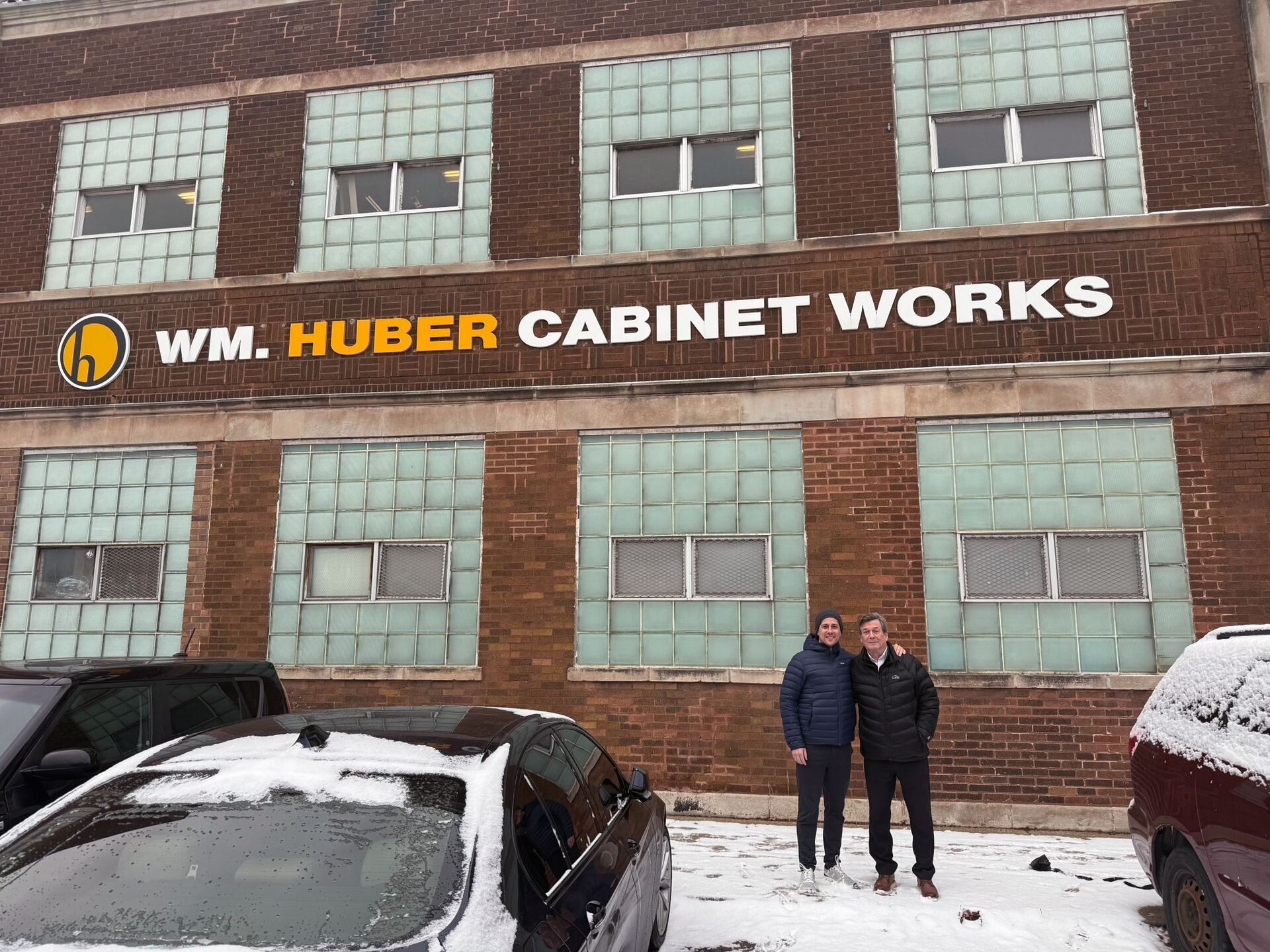
Me and my dad on his last day of work at Huber Cabinet, right after we inhaled breakfast tacos down the street in Logan Square.
Stuff I’m digging this week
UserEvidence Advocacy Demo Day—We hosted a live walk-through last month in the CMA Weekly community to go underneath the hood of UserEvidence Advocacy. The interest in the community afterward was bigger than we expected. So we’re running a live replay next Tuesday for anyone who couldn’t make it. The UserEvidence crew will be in the chat the whole time, so bring questions and fire away.
RevenueHero’s new inbound conversion benchmark report—Most inbound benchmarks get passed around without anyone knowing where they actually came from. This one doesn’t. It’s based on 1M+ form fills and shows where things actually break between “submit” and “meeting booked.” This report explains why inbound can look fine while quietly underperforming.
Indiana winning the football national championship—From the losingest program of all time to national champs on Monday night. Curt Cignetti summed it up perfectly after the game: belief, discipline, and doing the work when no one’s watching. A huge moment for my alma mater, IU fans everywhere, and the entire state of Indiana (even West Lafayette).
Hold up—what does UserEvidence do again?
Most companies have great customers. What they don’t have is a way to activate them.
So the stories, the insights, and the people who would actually help end up scattered across decks, tools, and Slack threads. Things get messy. Quotes get lost. Advocates get overused. Deals slow down.
UserEvidence fixes that.
We give your GTM team one platform to activate your customer base. You can find new advocates, capture customer proof, and publish original research— then use all of it where it actually moves the deal forward.
Advocates — Activate your best customers without burning them out.
Evidence — Verified, believable stories and results buyers actually trust.
Research — Original long-form research content that shapes your narrative.
UserEvidence makes it easier for your team to use your customers in the channels and moments where trust matters most.